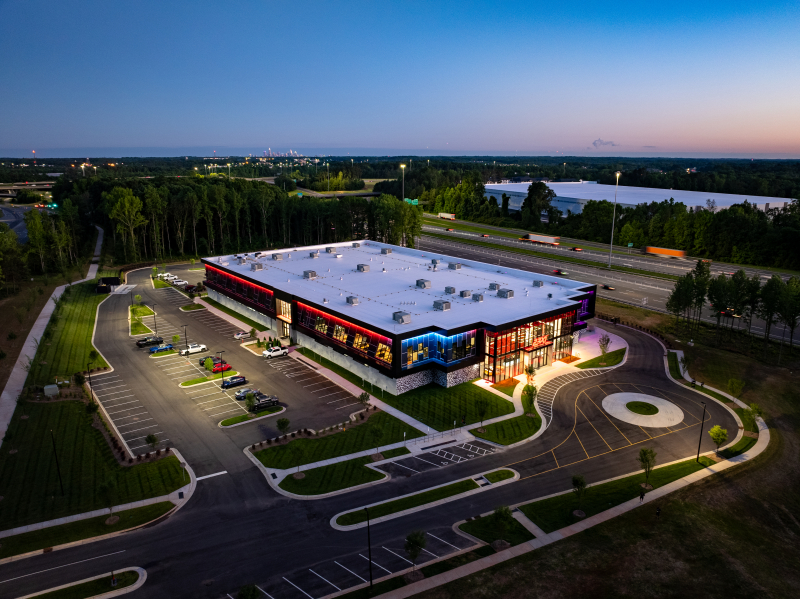
23XI AirSpeed
Huntersville, NC
Category: 2026 Corporate, Unique Installation Challenge
Architect: MSA
Designer: MSA
Starnet Member:
Bonitz Flooring Group, Inc.
Starnet Preferred Vendors:
Ardex, Küberit, Mapei, J+J Flooring, Johnsonite By Tarkett, Measure Square Corporation, Wagner Meters
Project Strategy
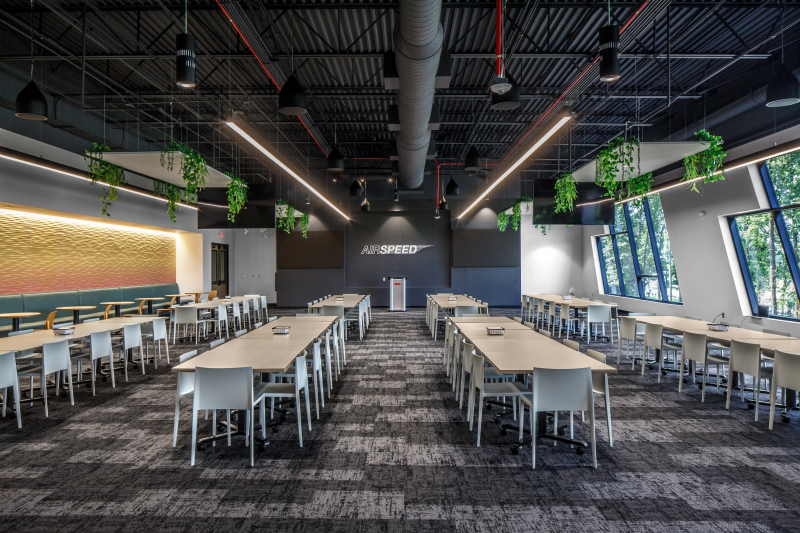
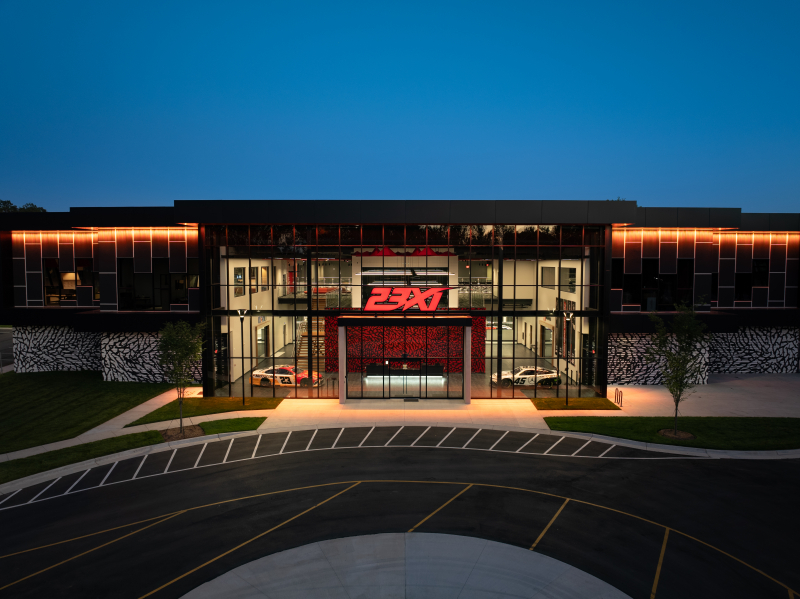
23XI Racing’s “Airspeed” is the headquarters and race shop for the NASCAR team co-owned by Michael Jordan and Denny Hamlin in Huntersville, North Carolina. Designed as a high-performance facility, it combines advanced technology with bold architecture and innovative tilt-up concrete construction. The building itself is a powerful architectural statement, pushing the boundaries of what tilt-up construction can achieve while reflecting the precision and intensity of elite racing.
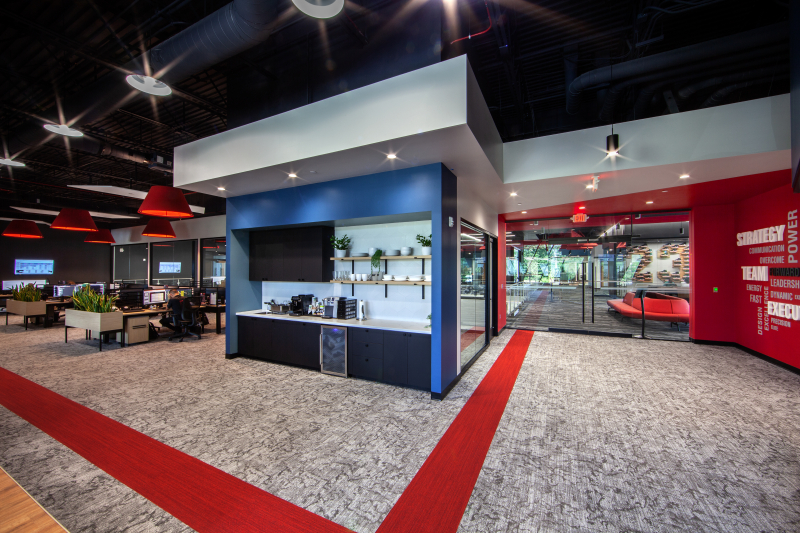
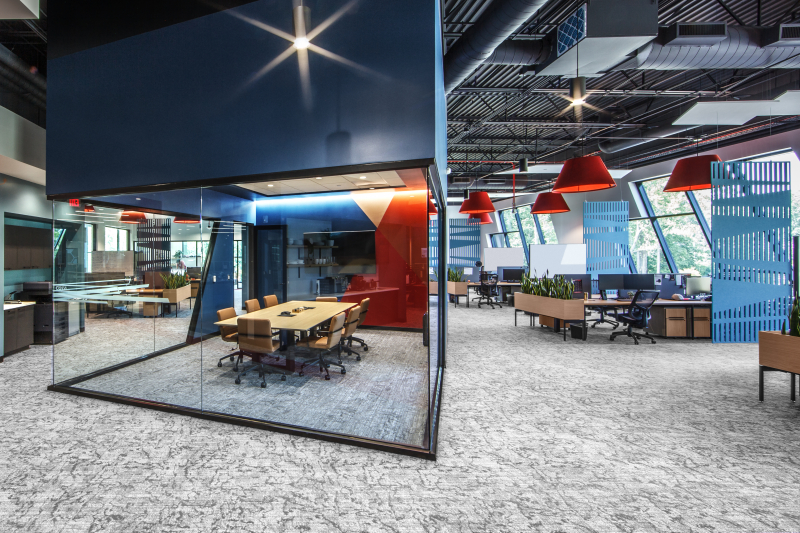
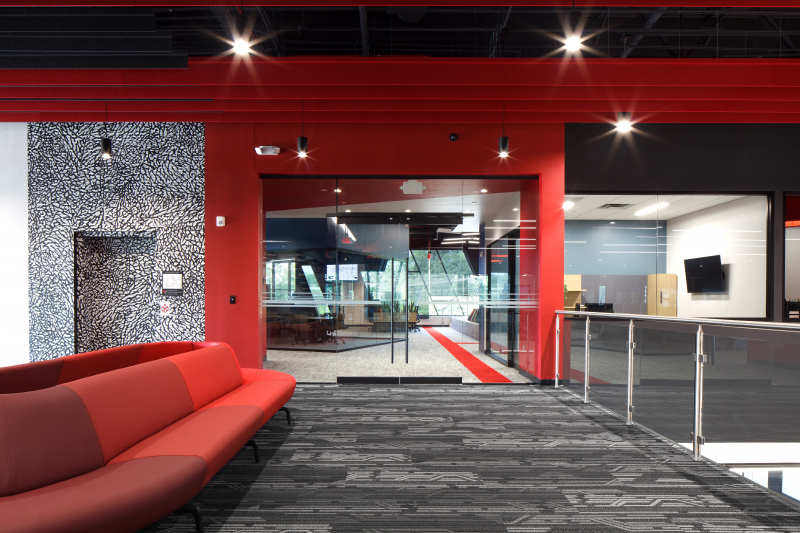
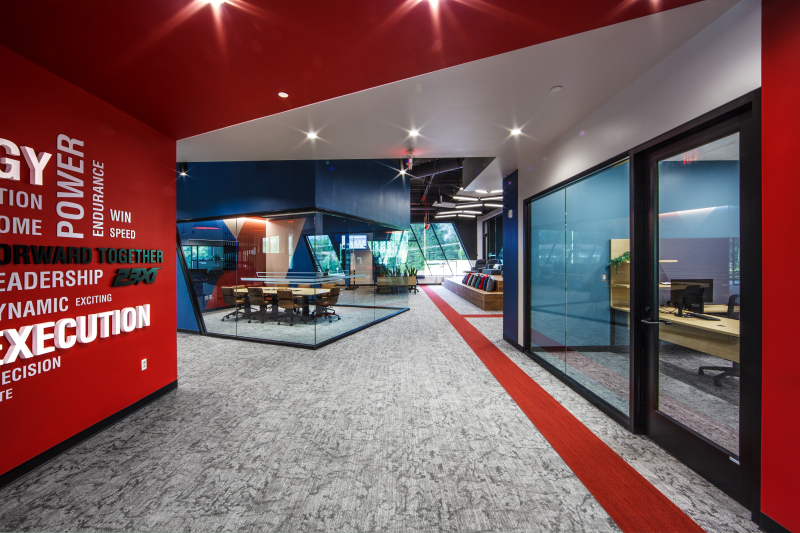
Signature design elements including 23-degree angled windows as a subtle nod to Jordan’s iconic number. Jordan Brand color accents, and elephant-print inspired graphics infuse the facility with a distinctive identity and contemporary edge. A striking two-story glass “jewel box” entrance displays race cars and trophies, welcoming visitors into a dramatic lobby that reflects the strength, innovation, and ambition of the 23XI brand.
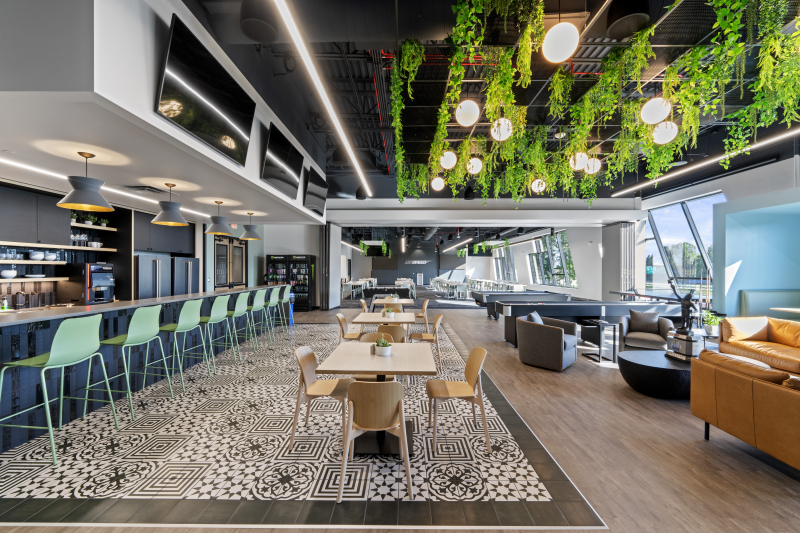
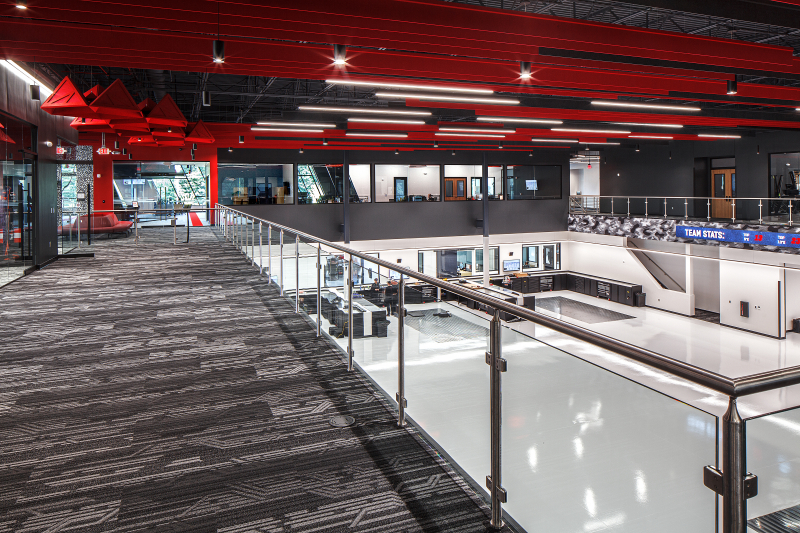
Inside, the facility is organized for efficiency, with dedicated spaces for car assembly, teardown, engine work, and quality control. Employee amenities such as a café, fitness areas, and informal collaboration spaces support teamwork and well-being. Airspeed also features a public lobby and merchandise shop offering exclusive 23XI Racing gear, reinforcing the connection between the team and its supporters Situated on a 16-acre site with room for future expansion, the campus is designed to grow alongside the team, with plans for additional facilities.
Unique Installation Challenge Strategy
Although the design itself was cutting-edge yet straightforward, the execution of the project presented a far more complex challenge. This was a high-profile, fast-paced project with significant financial and operational consequences tied directly to the building’s occupancy date. Meeting aggressive milestones required a highly coordinated installation strategy, particularly given tight time constraints and multiple trade dependencies within the critical path.
Our role was uniquely complex, as the team was responsible not only for all flooring installations but also for the acoustical assemblies—both of which directly impacted sequencing and access. Acoustical work, in particular, represented a major choke point for flooring progress, requiring constant adjustment and precision planning. Successfully navigating work both above and below the ceiling plane demanded seamless internal coordination and proactive communication with the General Contractor and fellow trades. This collaborative, integrated approach ultimately allowed the team to maintain momentum, mitigate schedule risk, and meet the project’s demanding delivery requirements.